

4 June 2024
Athletic Performance Insider

WELCOME😊
The Athletic Performance Insider newsletter is published weekly and presents up-to-date research, exclusive interviews, practical tips, and the latest industry news and trends. The newsletter filters newly published material relevant to various aspects of athletic performance, ensuring practitioners stay updated with the latest information to support their ongoing education and professional development.
This week Tim Gabbett is interviewed. He is a world-renowned sports science expert. His journey began early, inspired by his father’s work as a fitness trainer, and he has since developed a deep passion for maximising athletic performance. Tim has published over 300 peer-reviewed articles and has presented at over 400 national and international conferences. His research has been cited 38 465 times. His extensive experience includes working with world record holders and Olympic champions. He is dedicated to helping athletes achieve their best. Guided by the philosophy that hard work makes everything easier, Tim continues to innovate and inspire in high-performance sports. Despite these amazing accolades, the interview shows Tim remains grounded and humble.
The newsletter also highlights a paper on the effectiveness of recovery strategies for endurance sports, another on how the relationship between variables during testing is impacted by fitness, and a third on the use of data analytics in football.
If you want the newsletter delivered to your mailbox every Tuesday, press the subscribe button.

RESEARCH🧐
Are your recovery strategies working?
Li, S., Kempe, M., Brink, M. & Lemmink, K. Effectiveness of Recovery Strategies After Training and Competition in Endurance Athletes: An Umbrella Review. Sports Med. - Open 10, 55 (2024).
This study aimed to determine the effectiveness of various recovery strategies for endurance athletes. The researchers conducted an umbrella review, analysing systematic reviews and meta-analyses from PubMed, Cochrane Database of Systematic Reviews, and Web of Science up to December 2022. They included 22 reviews, encompassing 63 studies with 1100 endurance athletes. The primary focus was on comparing recovery strategies like cryotherapy, compression garments, and massage against control groups. Recovery was measured using various outcome variables, including athletic performance metrics like time to exhaustion, countermovement jumps, and running economy. Physiological adaptations were assessed through lactate levels, oxygen consumption (VO2), maximum oxygen consumption (VO2max), heart rate and creatine kinase. Additionally, perceived outcomes such as the rate of perceived exertion (RPE) and muscle soreness were also evaluated.
The results indicated that cryotherapy and compression garments positively affected recovery, while massage did not demonstrate significant benefits. However, no single recovery strategy consistently benefited endurance athletes across all studies. The quality of the included reviews ranged from low to moderate, highlighting the need for improved research methodologies.
In conclusion, while cryotherapy and compression garments may aid recovery, there is no definitive recovery strategy for endurance athletes. Future research should focus on refining methodologies and exploring different recovery timelines.
Should testing be tailored to match fitness levels?
Rabbani, A., Ermidis, G., Clemente, F. M. & Anderson, L. Monitoring Within-Individual Dose–Response Relationships in Professional Soccer Players: The Importance of Fitness Level. Int. J. Sports Physiol. Perform. 1–7 (2024). doi:10.1123/ijspp.2023-0434
This study investigates the within-individual dose-response relationships between training load measures and changes in aerobic fitness in professional soccer players, focusing on the influence of fitness levels. Researchers collected data on total minutes, total distance, mechanical work, high metabolic load distance, and Edwards’ training impulse using GPS and heart-rate sensors during an in-season phase. Aerobic fitness changes were tracked using a submaximal warm-up test over nine phases. Each phase lasted 5 to 21 days, depending on the seasonal structure and break periods. During these phases, players completed a submaximal warm-up test (SWT) before and after each phase to elicit exercise heart rate (HRex). This test was conducted at the same time (10:30 AM) and on the same macrocycle day, three days before match day (MD-3), ensuring consistency in the measurements. The SWT has been validated as a reliable method for assessing aerobic fitness.
Results showed a wide range of dose-response associations among players, with correlations ranging from negative to positive (r = −.84 to .89). Notably, players with lower fitness levels exhibited stronger inverse relationships with accumulated weekly minutes and distance (r = −.71 and −.65, respectively). Other measures showed moderate correlations (r = −.35 to −.42).
The study concludes that individual players respond differently to training loads. The researchers suggest monitoring accumulated training loads (total minutes and total distance) and submaximal exercise heart rate at an individual level to understand each player's physiological changes during different season phases.
Is your football club maximizing the power of data analytics?
Lolli, L., Bauer, P., Irving, C., Bonanno, D., Höner, O., Gregson, W. & Salvo, V. D. Data analytics in the football industry: a survey investigating operational frameworks and practices in professional clubs and national federations from around the world. Sci. Med. Footb. ahead-of-print, 1–10 (2024).
This study investigates the operational frameworks and practices of data analytics in professional football clubs and national federations worldwide. The research question focuses on understanding how these organisations develop and utilise data analytics infrastructures and information systems.
The study used a cross-sectional survey distributed during an international conference to practitioners from the 32 national federations qualified for the FIFA World Cup Qatar 2022 and top-tier professional football organisations part of the Aspire in the World Fellows. The survey, designed by experienced academics and practitioners, covered personal demographics, data ecosystems, the importance of analytics interfaces, and the value of positional data processing for decision-making.
Key findings indicate that while data analytics is widely recognised for its potential to enhance tactical performance and decision-making, there are significant variations in implementing and utilising these systems across different organisations. The study highlights the need for standardised practices and better resource allocation to maximize the benefits of data analytics.
The practical applications suggest football organisations should invest in robust data analytics infrastructures and training for staff to leverage actionable insights effectively. This investment can improve performance analysis, strategic planning, and competitive advantage in professional football.
INTERVIEWS AND PROFILES🤝
Up close and personal section – Tim Gabbett
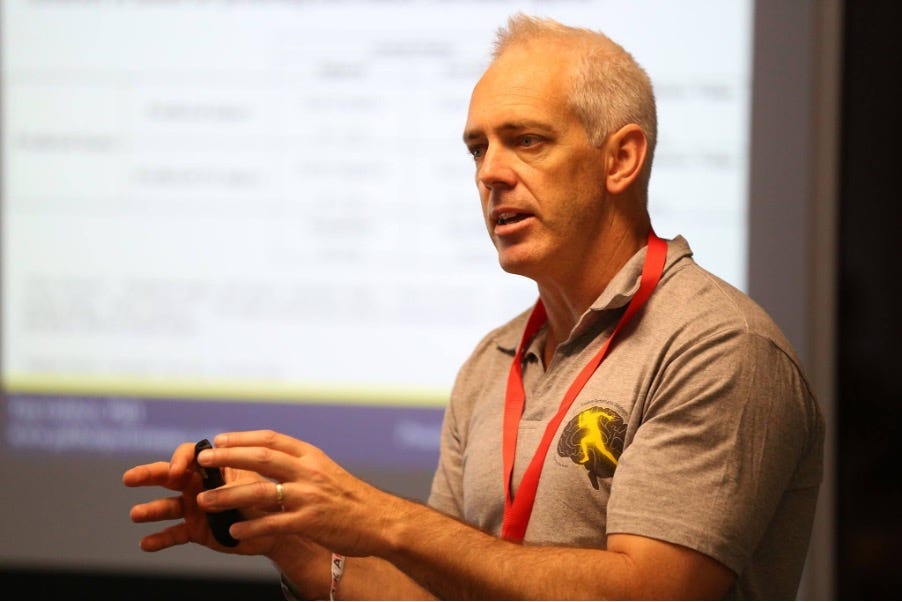
Name and qualifications
Tim Gabbett – I have a PhD in Applied Sport Science and a second PhD in Cardiovascular Physiology. I’ve also completed a Bachelor of Sport & Exercise Science with first class Honours.
Background and Introduction
My father was a fitness trainer (long before it was a profession). Some of my earliest memories are of following him around various training sessions (rugby league, soccer, track and cross country) and joining in the training with the different athletes. I think I was about 10 years old at the time. I guess you could say I got addicted to the smell of liniment from a very early age and have been around it ever since! More importantly, I learned far more from those experiences than I ever did from any textbook.
Motivation and Passion
Again, that passion probably came from my dad. We were both average athletes, but we had a lot of effort! And because of that, we got as much out of our bodies as our limited capacities allowed! I still remember the moment I learned how to train and when I look back on that moment and reflect, EVERYTHING changed that day! The lessons I learned from training have helped me in so many other aspects of my life.
Career Journey
There have been turning points along the way. At the end of my Honours degree, I could either work in a hospital or do further research. If I had taken the hospital job, my entire career trajectory would have been completely different. Doing the research put me in a position to be more competitive for high performance sporting roles. Getting those roles put me in a position to work with some of the greatest athletes in the world (World record holders, Olympic champions, multiple championship -winning teams). But the turning points aren’t always positive – at least at the time. For example, when my contract hasn’t been renewed by a team (that’s a nice way of saying I’ve been sacked!), these have been significant turning points. But I have always had the philosophy that when that happened, that job was just holding me back from something better.
Challenges and Learning
There are so many challenges that practitioners face throughout their careers. When you’re starting out in research, there are inevitable rejections of publications. If you work in sports long enough, you will eventually lose a job. You hope that your athletes and teams win more than they lose, but that’s not always the case. In these moments, it is really important to stay composed and trust the things you know work. This is particularly important when you have a young team or young staff that you’re leading – they will feed off your cues. I think it’s just as important to firmly keep in mind that ‘what we do is important, but none of it matters!’ In the overall scheme of things, if something serious happens to the people you care about, it really puts winning and losing a sporting contest or having a paper accepted/rejected into perspective.
Memorable Experiences
There have been many great victories at really big events, but they are the obvious ones. I take a lot of pleasure out of seeing athletes achieving things that they previously couldn’t do – or thought they couldn’t do! They’re the things that stick with me the most.
Daily Routine and Work Ethic
Depending on the sport and the level of the athlete, my day could start on the pool deck at ~5:00 am and might finish at ~8:00 pm. It is a lot tougher on the Olympic athletes as most of them also have jobs or are at university. My days with the professional athletes aren’t as long, although there are some busier times during the week.
Motivation has never been a problem for me. Whether I am working with an individual or a team of athletes, they make a lot of sacrifices to be the best they can be. My philosophy has always been to use my skill set to help them achieve their goals.
Relationships with Athletes
Training athletes is not just simply writing a program and saying, “do this”! I have to work out their strengths and limitations, but more importantly, I need to work out what makes them tick. What works for one athlete, won’t work for another. I get to know them, learn some things about them and their family, what they like doing in their spare time, what they “think” they need to do to improve. If I am training individuals within a team, there will be times when I train with them. This gains trust straight away because they know I am not asking them to do anything that is unrealistic or excessive. It also means they compete a little harder because they don’t want this “old” guy to beat them!
Adaptation and Innovation
Working in sports, I get emails from various companies every day, so they do a lot of the work for me. The real skill is deciding what is worth pursuing and what is snake oil! I spend a lot of time working and speaking with other practitioners from other sports and teams, so I have a good idea of what is being done and showing promise. I still keep up to date with peer-reviewed research, but most of the advancements are being made by practitioners a long time before any research is published.
Personal Connection to Sports
I enjoy sports where the athletes are truly committed to the process and have discipline around their preparation. That might sound like a strange thing to say – “aren’t all athletes committed to getting better?!” Unfortunately, it’s not always the case – some are professional athletes and others are just paid a lot of money to play sport!
Advice for Aspiring Professionals
One of the best things I did before I even contemplated working in elite sport was do a long apprenticeship at a sub-elite level. I feel a lot of people are missing this important step now. The apprenticeship allows you to take control of your own programs and teams and make a lot of mistakes where the stakes aren’t as high. As long as you learn from those mistakes, when you get to the elite level, you know what works. And when your athletes lose a few games in a row, you don’t blink! If I was giving advice to anyone aspiring to work in high performance sport, it would be to take your time getting there, and take the time to understand what works for you. Then, when you get to the elite level, you can make a real impact.
Balancing Work and Personal Life
It’s not something I did well early in my career - I’ve been very lucky to have an understanding wife and family! As time has passed, and contracts have ended for one reason or another, I’ve realised that it’s important to do my best – but firmly keep in mind that the relationship with the team is going to end at some point, and it may not always end well. Sometimes the team sacks you, and other times you might sack them! But it will always come to an end. That has allowed me to prioritise what is important – and that is the people in my personal life.
Future Goals and Aspirations
That’s simple – just keep trying to make a difference!
Favourite Quotes or Mantras
I have many, but these are my Top 3:
1. “The harder you work, the easier it gets!”
2. “Things are never as good…or as bad as they seem!”
3. “You can’t kick goals while you’re sitting in the grandstands!”
Tim’s websites
- Research
- Gabbett Performance
INDUSTRY NEWS📡
Can quantum capacitance revolutionise lactate monitoring?
Wikeley, S. M., Przybylowski, J., Gardiner, J. E., James, T. D., Fletcher, P. J., Isaacs, M. A., Lozano-Sanchez, P., Caffio, M. & Marken, F. Pyrene-Appended Boronic Acids on Graphene Foam Electrodes Provide Quantum Capacitance-Based Molecular Sensors for Lactate. ACS Sens. 9, 1565–1574 (2024).
This study investigates using pyrene-appended boronic acids on graphene foam electrodes to create quantum capacitance-based molecular sensors for lactate detection. The sensors demonstrated high selectivity and sensitivity, with detection limits of 1.3 mM in aqueous buffer, 1.4 mM in artificial sweat, and 1.8 mM in human serum.
The practical application of this research in measuring lactate lies in developing wearable sensors for real-time, non-invasive health monitoring. These sensors can be used to track lactate levels in athletes, as well as in patients, to monitor conditions such as ischemia, hyperlactatemia, septic shock, and heart attacks. The capacitance-based sensors provide accurate lactate measurements without consuming the analyte as in traditional lactate sensors, making them suitable for continuous monitoring in various environments, including sports, clinical settings, and potentially food quality control. Quantum capacitance opens up opportunities for wireless sensing applications, eliminating the need for an internal power supply.
Can AI-powered hearables help athletes listen to coaches in noisy environments?
Veluri, B., Itani, M., Chen, T., Yoshioka, T. & Gollakota, S. Look Once to Hear: Target Speech Hearing with Noisy Examples. Proc. CHI Conf. Hum. Factors Comput. Syst. 1–16 (2024).

This study addresses the challenge of isolating target speech in noisy environments using an intelligent hearable system. The study introduces a novel enrolment interface where users look at the target speaker for a few seconds to capture a noisy binaural audio example. This example is then used to learn the speech traits of the target speaker and subsequently isolate their speech from background noise.
User studies showed that the system works well with different speakers in real-world settings, stationary and moving, without losing performance compared to clean audio samples.
The practical implications of this research are far-reaching. It could significantly enhance communication in crowded conferences, restaurants, and public spaces. Moreover, it can potentially revolutionise hearing aids by enabling them to focus on specific speakers. This technology could prove invaluable in sports, facilitating more effective communication between athletes and coaches in noisy stadiums or training environments.
-oOo- -oOo- -oOo- -oOo- -oOo- -oOo- -oOo- -oOo- -oOo- -oOo- -oOo- -oOo-
Please subscribe to make sure you get a weekly newsletter. The next newsletter will be published on 11 June 2024.