

6 February 2024
Athletic Performance Insider

WELCOME😊
Paul Delport shares his remarkable story as a rugby prodigy, transitioning through all the national age group teams to professional rugby before becoming a dedicated coach. In this candid interview, Paul reflects on his transition from a high-level rugby player to a coach, bravely navigating the hurdles that shaped his transformative path.
The Athletic Performance Insider newsletter is published weekly. Here, you will find the most up-to-date research, exclusive interviews, practical tips, and the latest industry news and trends.
You can click this link to get updated if you missed the introductory newsletter. This explains the background and how the Athletic Performance Insider came to be.
If you want the newsletter delivered to your mailbox every Tuesday, press the subscribe button.

RESEARCH🧐
Do you need a primer for updating your knowledge about delayed onset muscle soreness after resistance training? If so, read this paper……
Li, D. C. W., Rudloff, S., Langer, H. T., Norman, K. & Herpich, C. Age-Associated Differences in Recovery from Exercise-Induced Muscle Damage. Cells 13, 255 (2024).
This article comprehensively reviews the cellular mechanisms underlying exercise-induced muscle damage (EIMD), particularly in older adults, and the nuanced aspects of recovery from resistance exercise. It delves into the aetiology of delayed onset muscle soreness (DOMS), highlighting the role of mitochondrial dysfunction, inflammation, extracellular matrix remodelling, and lipid mediators in the impaired recovery observed with ageing. The review emphasises the importance of understanding these mechanisms to inform targeted interventions for resistance training programs tailored to older individuals, aiming to promote healthy ageing and maintain functional independence.
How do different submaximal fitness test protocols affect the test-retest reliability of various outcome measures?
Shushan, T., Lovell, R., McLaren, S. J., Barrett, S., Buchheit, M., Scott, T. J. & Norris, D. A Methodological Comparison of Protocols and Analytical Techniques to Assess the Outcome Measures of Submaximal Fitness Tests. Int. J. Sports Physiol. Perform. 1–13 (2023).
This research examined the test-retest reliability of various outcome measures from submaximal fitness tests (SMFT) using different protocols and analytical techniques. Conducted on twenty-six semi-professional adult soccer players, the study involved three SMFT protocols and collected data on heart-rate indices, PlayerLoad, and foot-mounted micro-electrical mechanical systems (MEMS) derived variables.
The study found that exercise heart rate (HRex), the vertical component of PlayerLoad (PLV), and contact-time (CT) demonstrated high reliability regardless of the SMFT protocol or analytical approach used. These measures were stable and could assist in assessing an athlete's aerobic capacity and lower-limb neuromuscular status.
Practically, the research suggests that HRex during continuous SMFT is a reliable indicator of an athlete's physiological state. For better heart rate recovery (HRR) outcomes, the last 5–10 seconds of the recovery period should be used. The reliability of PLV and CT was consistent across different testing protocols, indicating their usefulness in monitoring neuromuscular training effects. The study highlights the importance of selecting appropriate SMFT protocols and analytical techniques to ensure accurate assessment of an athlete's fitness and training progress.
What is the range of responses after resistance training when people do the same training?
Moda, T. E. dos R., Viana, R. B., Dias, R. K. N., Penna, E. M. & Coswig, V. S. Responsiveness of functional performance and muscle strength, power, and size to resistance training: A systematic review. Sports Med. Heal. Sci. (2023).
This research aimed to understand how individuals respond differently to resistance training (RT) regarding functional performance, muscle strength, power, and size in healthy adults. A systematic review included 13 studies with 921 subjects.
The study found a wide range of responsiveness, with non-responder rates varying from 0% to 44% for muscle strength, 0% to 84% for muscle size, and 0% to 42% for functional performance. Only one study addressed muscle power, showing a 37% responsiveness rate. The risk of bias assessment indicated that most studies had some concerns, with only two studies classified as low risk.
The conclusion highlighted that while RT can be highly effective, a significant proportion of individuals may not respond, particularly in muscle size and strength. Increased RT volume and intensity were suggested as potential ways to enhance effectiveness.
Practically, the findings suggest that RT prescriptions should be individualised, considering factors like training load, volume, and the specificity of exercises. This personalised approach could improve responsiveness rates in muscle development and functional performance.
TRIVIA🫣
Breakdancing, also known as "breaking," will debut as an Olympic sport in the Paris Games later this year.
There will be two events in the program - one for men and the other for women. The dancers will perform improvised routines to music played by the DJ. In 2018, breakdancing made its debut in the Youth Olympic Games held in Argentina.

PRACTICAL 🤔
The 26-year-old Manchester United player Lisandro Martinez was injured in the 68th minute in a collision with West Ham defender Vladimir Coufal. The injury looked serious, perhaps a season ender.
Dr Brian Suttner discusses Lisandro Martinez’s knee injury and predicts the severity.

INTERVIEWS AND PROFILES🤝
Close and personal section - Paul Delport
Name
Paul Stephen Delport
Background and Introduction
I was fortunate to attend South African College Schools (SACS) from grade 1 to matric. There were so many options for sports, and that is where I learned to love sport. My Dad, Stephen, was a keen sportsman playing rugby and cricket and doing athletics. My Mom, Diane, is very athletic and played many sports at school. My Dad has completed countless half and full marathons over the years, while my Mom stuck to the shorter stuff. My late brother Craig was also a talented sportsman. My folks and brother were always incredibly supportive of any sport I played.
In high school, I realised I was a pretty decent rugby player, and after making the South African (SA) Schools team in grade 11, I decided I wanted to pursue rugby as a career. I was fortunate enough to be selected for the SA U19 Team in my matric year, where I was exposed to proper elite-level training and rugby. Most of the gents in the team were in their first year as pro players, and I learned a lot from many of them.
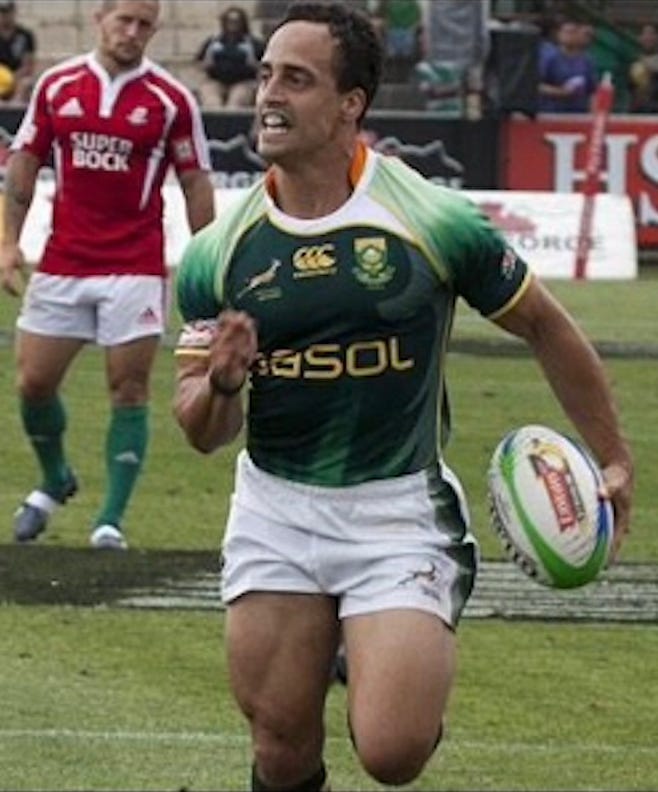
I went on to represent Western Province at the U19, U20, U21 and Currie Cup level. I played for the CATS and Stormers at the Super Rugby level and captained the SA U19 and SA U21 World Cup winning teams, respectively. I finished my career playing for the Blitsboks from 2008 to 2014.
I saw a fair amount in my playing days and was exposed to so much good and bad. I wanted to impart the knowledge I had gained along the way and create better environments for the players coming through than those I had been exposed to. Hence the decision to get into coaching.
Motivation and Passion
I don’t think any one thing inspired me to follow a career in athletic performance. I have always been someone who went against the grain. Many people said being a professional player wasn’t a viable career option or that it was too risky. I wanted to do it, so I did. That sounds very simplistic, but that is how simple the decision was. My family and close friends were always incredibly supportive, and in the dark times, they inspired and carried me through.
The inspiration to get into coaching was the thought that there must be a better way to do things. I must be honest and say that I often defaulted to what I knew (the way I was coached and the methods I saw in the systems I participated in), which was disappointing. I always want to drive performance to help a player develop holistically while trying to create an environment where they can grow, have fun and be respected. I often did not get the balance right as I was driven to achieve so much.
I have, over the past few years, become more balanced. Sports persons are people before anything else. These people have the same worries and difficulties as all of us. In saying that, I feel that in the sporting realm, we must understand that we are entertainers. We must deliver a product which piques interest and is aspirational. Finding this balance is what led me back into athletic performance after my sabbatical. This world is not for everyone. You have to care about the details, at times you must be ruthless, at times you must be nurturing and understanding. But if nothing else you have to be willing to push boundaries, be innovative and adaptable, give all of yourself, and be willing to fail. I find all of that so exciting.
There have been a few moments over the years that have solidified my passion for working with athletes. The best way for me to describe the moment is when a player “gets it.” It could be a skill you have been working on, a player identifying something I have missed while analysing, a win or a moment of brilliance one was not expecting. I think the most fulfilling part of my journey is seeing how young folk grow in front of my eyes—also seeing the young girl from a village who is shy and struggles to communicate, being brave enough to voice her opinion in a meeting. And seeing the player you didn’t think was brave stepping up to take the conversion from the corner to win the match. Or leaving the team to their own devices and seeing them devise a plan. Another moment was seeing an individual figure out and live their values and see how these incredibly talented young men and women become heroes and role models but stay grounded and humble.
On the field, there have been a few moments of a plan coming together where the players implement precisely what you want them to, and it is like poetry in motion. This is a wonderful feeling because, considering all the variables, it does not happen as often as people might think.
Career Journey
It was always a dream of mine to play 15’s for the Springboks. I represented South Africa at U18, U19, and U21 levels, captaining all three. I represented Western Province in Vodacom Cup and Currie Cup and I played Super Rugby for the CATS and Stormers. In 2008 my younger brother took his own life and it broke our family. I quit rugby as I was not enjoying it. Six months after the tragedy Paul Treu offered me a National 7’s contract. He was so understanding and supportive. He allowed me to enjoy rugby again. I played for the Blitsboks from 2008-2014.
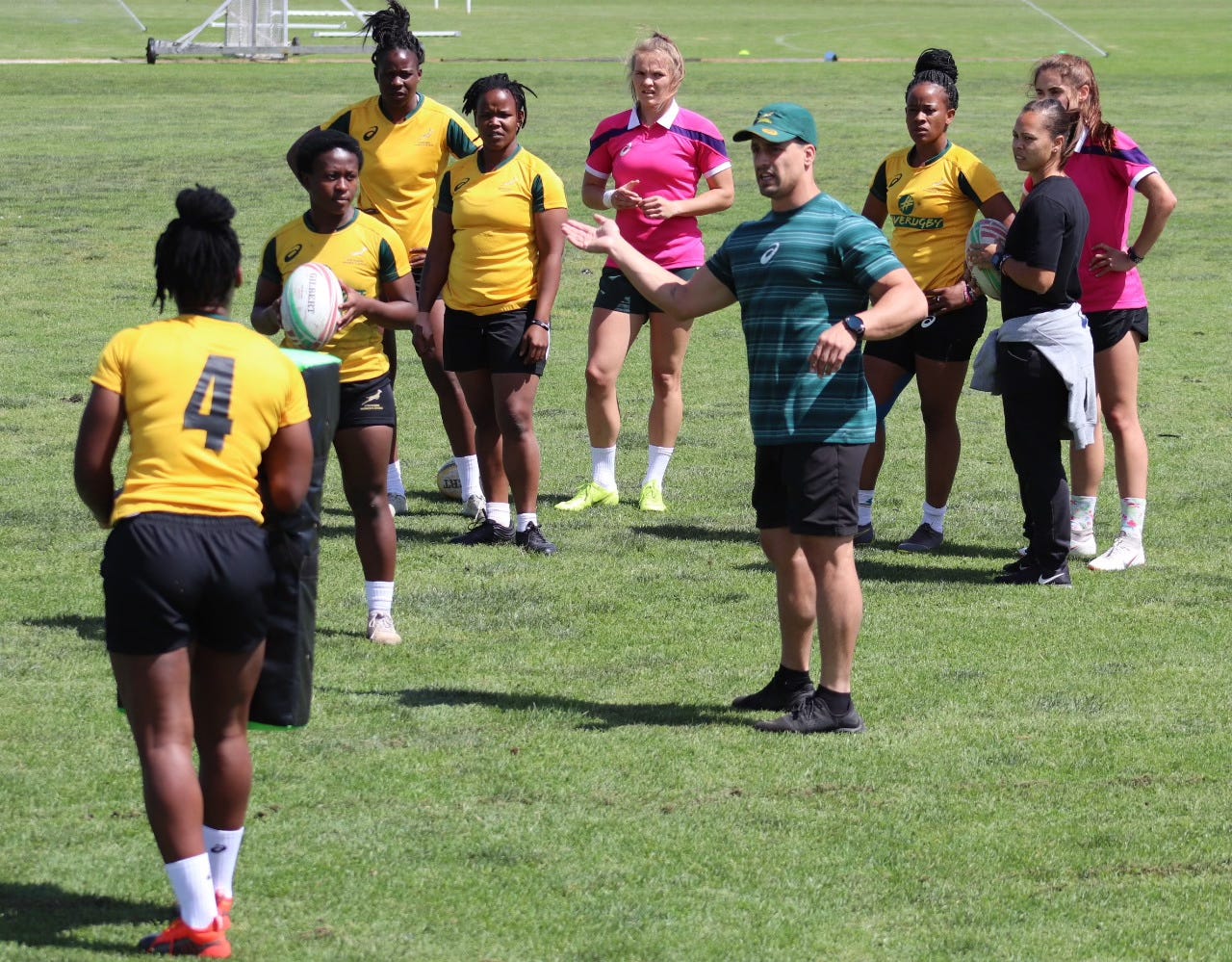
I suffered a career-ending back injury, and I transitioned into the coaching space with the National 7’s Academy. I was involved with the team from 2015-2018. I was fortunate enough to assist Renfred Dazel with the Springbok Women’s team in 2015 and 2016. I took over as Head Coach of the Women’s team in 2018 until I resigned in 2022. Coaching Women undoubtedly made me a better coach. The young women I coached thought so differently from the men I had coached. They questioned more, wanted to understand the “why,” and questioned me in a way I had never been questioned before. I was left to my own devices most of the time, and it was a baptism of fire. The ladies forced me to become more thoughtful. To think deeply about how I delivered a message or conveyed a new idea. I made many mistakes but also tried to be innovative. One of my mantras was, “No idea is too crazy“, and though much of the process was frustrating due to lack of support, the coaching experience was fulfilling. I witnessed many young women grow into special people & athletes. I also worked with incredible people like Dr Michele van Rooyen to name one of many.
Challenges and Learning
The biggest challenge was undoubtedly the loss of my brother. He was an incredibly special human being, and I still feel guilt with regards to not identifying he was struggling and suffering with mental illness. I suffered a major illness in 2006. I picked up Epstein Barr Virus (EBV) and ended up with meningitis, encephalitis, viral hepatitis and kidney failure. I was told I would never play again. I spent a month in hospital, lost 20 kg’s and spent 9 months out of the game. I was lucky to have the brilliant Prof Wendy Spearman looking after me. I was told I would suffer from Chronic Fatigue Syndrome (CFIDS ), and to be honest, I have my days, but I was able to play professionally for another 8 years after recovering. I have always thought life to be about making decisions. I pride myself on the fact that if I decided to do something, I would throw myself into the task with everything I had. I have been like this with regard to retiring and resigning. If I was done, I was done.
A huge challenge for me was coaching in the Women’s space in South Africa. The rest of the world sees the value and is willing to invest in women’s sport and rugby. In South Africa, this is not the case. The Women’s game is not taken seriously in South Africa, and it makes me very upset. It hurts to see these talented young women making sacrifices, training like their lives depended on it and being brave enough to lay it on the line against the best international teams in the world, knowing that we were never given the necessary resources to be able to compete. The fact that we, as the Women’s program, qualified for two Olympic Games and were denied the opportunity to compete speaks volumes. It has always been the bare minimum investment, and I could no longer sell that lie to the talented players. I was also so frustrated by the process that I could no longer be the coach and person I had prided myself on being. I left because I had no respect for South African Rugby and the ladies’ deserved more from their Coach.
Memorable Experiences
A memorable experience working with athletes was when Marius Schoeman and I coached the SA U18 7’s team at the Youth Commonwealth Games in Samoa in 2015. The team was unbelievably talented. Superstars all around, with players like Damian Willemse, JC Pretorius, Hacjiva Diyamane and Embrose Papier, to name a few. We did not have that much time together, and contrary to popular belief, getting a team of superstars to come together is not the easiest. Not with this group, though. They were such good kids and such good teammates. I remember that they had the option to stay in three rooms (four in a room ), yet they moved into two rooms and made the third room a team room to spend more time together. They worked so hard and showed such a love for playing the game and a joy and understanding of what they were experiencing as a team and individuals. I was incredibly hard on them because they were talented. I loaded them with details in analysis and field sessions, and those young men just kept growing and accepting every challenge. We won the tournament, beating the hosts Samoa in the semi and Australia in the final.
Daily Routine and Work Ethic
I have always enjoyed the tactical periodisation model. Every day has a theme. It is a good way to work towards a goal. Monday is installation day, where our focus is on analysis, formulating a plan for the week and how to execute the plan efficiently. Lots of personal development is focused on. Fundamental and individual skills and individual analysis.
Tuesday is a work day. We will focus on our field intensity and contact work. We will have one session where we try to push in parts at above game intensity.
Wednesday is rest, recovery and analysis. Players have the option of doing individual skills.
Thursday is a fast day, where we are looking at the pace and execution. Decision-making is also a big focus.
Friday is the player’s day. They have a Captain’s run and a team lunch/outing. I like that the players make all the decisions on their day. They are left completely to their own devices. Management is there, but we only get involved if the players ask that of us. Saturday is game day.
Currently, I have to think differently, as Lithuania is amateur. All the players work or study, and we have limited time together. I am travelling around the country to spend time with all the players of national interest. We are currently doing indoor skills sessions during the week as it is too cold to train outside. We have a National camp in a full-sized indoor facility twice a month.
When I’m feeling good, I work and take it to the max, and when I am not motivated, I try not to be hard on myself. We are not machines and will have off days. That is perfectly okay. I had a “ Joker card “ in the Women’s team where if the ladies had an off day, they could take that day off, no questions asked. This is the reason I believe in a flat leadership structure. This allows everyone to pick up some slack and lead when their time comes. On the days I’m not feeling it, I will read, spend time with my family, go to the gym and switch off until I am recharged and ready to work again.
Relationships with Athletes
Honesty and transparency are how I establish rapport and trust with the athletes I work with. I am who I am, and I own it. I expect players I coach to contribute in their own special way. If they do not, I call them out. Plenty of people do not like me because I am brutally honest, do not play politics and wear my heart on my sleeve. Players may not like me, but I will always be honest with them. I treat them like people before athletes; my job is to try to make them better people and rugby players. The sport they play does not define them; I try to remind them of that daily.
Adaptation and Innovation
At the moment, my focus is more on leadership, feedback, personal development and the management of elite/HP teams. There is so much information out there on LinkedIn, etc, and I try to keep up to date with forums that interest me. I do loads of reading. Rugby is a simple game and I stay on track by watching as much as I can and doing my own analysis. I also chat with many people in the rugby/sports space who are smarter than me. I think keeping an open mind is important in my current work. In my new role, I cannot have preconceived ideas as I do not know the culture of the team or the individual players'/team's strengths. I am allowing them to lead me, and we will formulate a plan based on our personnel and their skill sets.
Personal Connection to Sports
Rugby is my job and I am passionate about it. My favourite sport is cricket. I have always shared a love for the game with my Dad and late brother, and I have fond memories of us watching cricket together. I think the reason my brother and I loved it so much growing up was that we were not allowed to watch TV during the week. We read. On the weekend we could watch TV, provided it was sport. What was longer than test cricket? Hence the love of it. I appreciate that it is a war of attrition. In this day and age of instant gratification, it is something different. I also enjoy athletics. There is no BS. If you run the fastest, jump the highest, throw the furthest you are the champion, no arguments.
Advice for Aspiring Professionals
The field of athletic performance is so broad. Be brave and follow your heart through the various stages. I love the world we live in now. If you are smart enough, you can carve out opportunities for yourself. I have mates who were strength and conditioning trainers and physiotherapists who are now international coaches. Be adaptable and innovative, and don’t be afraid to explore opportunities. I missed out on so much because I had blinkers on. I am 39 and still do not know what I want to be when I grow up. NEVER put yourself in a box and kick imposter syndrome in the face. I love the quote, “Someone else is out there living your dream because they didn’t say no to something they knew nothing about.”
I have also learnt that hard work is not an indicator of success. You can learn to work smart.
Find YOUR balance. I do not believe successful people have balanced lives in the conventional sense. The people around you supporting you are the ones who help you find your balance. It is important to communicate with them and allow them to be part of your decisions. Do not ever feel bad about doing what you must do. That opportunity might only come once.
Embrace technology. That was more of a problem with my generation. The Gen Z’s and X’s have it waxed.
Be unashamedly you. I spent so long trying to please people who did not value me, not living who I was. To the extent that I am still in therapy working on my people-pleasing tendencies. I no longer suffer fools gladly, and I feel like a huge weight has been lifted.
Balancing Work and Personal Life
I did not balance professional commitments and personal life well in the past. I always believed that if you want to do things others can’t, you need to go above and beyond and do things others won’t. Professional sport is a selfish, lonely place and the sacrifices are real. The biggest challenge, arguably, for anyone in that environment is finding that balance. Being in Lithuania away from my family is incredibly difficult, but my better half and I discussed it. We know why we are doing it. It is a space I feel I can make a positive contribution.
Future Goals and Aspirations
I am in somewhat of a transition phase. I spent three years coaching The Blitsboks Academy side and another five coaching the Springbok Woman’s 7’s team.
I resigned to re-evaluate what was important to me. The past year was an extremely frustrating time professionally but a fulfilling time in my personal life. I spent quality time with my better half and son. We built a house and got a puppy. I spent time in therapy and in anger management to try and work through the issues I had with work.
I was involved with my son’s school and did some charity work and school coaching. There was a brief sojourn with the Thailand Women’s 7’s National team. Unfortunately, it did not work out.
I am currently back in the coaching fray with the Lithuanian Men’s 7’s team,, aiming for a top 8 in the European Championships in June later this year. There is a lot of work to do. I am currently putting certain structures in place to put us on the path to an elite-level program.
Favourite Quotes or Mantras
Two spring to mind:
1. “The way you do anything is the way you do everything” is the mantra I live by. So much so that there was a point in my life where I was scared to venture into the unknown and try something new in fear of not being good at it. As I’ve grown, I now appreciate new challenges and know that if I give my best, I am growing and learning I am on the right path.
2. “A candle loses nothing by lighting another”. It is our duty to care and help where we can. From a coaching perspective, I have so much knowledge. I want to impart that knowledge and share it with people. I hate the term intellectual property. In the elite/HP sporting realm, if you think you are doing something so special and different to anyone else, I suggest you take stock and hopefully decide to impart that knowledge. I am a big believer in altruism. Effective altruism is tailored to you as an individual, your belief systems and what you value. I love children and animals, so I try and give back in that regard.
-oOo- -oOo- -oOo- -oOo- -oOo- -oOo- -oOo- -oOo- -oOo- -oOo- -oOo- -oOo-
Subscribe to ensure you get a weekly newsletter. The next newsletter will be published on 13 February 2024